Here is a tip from Danny Lipford, a nationally syndicated TV show host of Today's Homeowner with Danny Lipford.
What could that wet spot on my ceiling mean?
The dreaded water stain on the ceiling is a sure sign of a leak that needs to be fixed right away, before it does any more damage. A little detective work in the attic or room above the leak should, in most instances, reveal what's causing it.
Roof leaks can be difficult to find, because water often runs down the roof decking or rafters before it reached the ceiling. Common culprits include damaged shingles, nail pops, gaps around flashing on chimneys, dormers, valleys or cracked vent pipe boots. Damaged shingles should be replace and suspicious spots sealed with roofing cement.
Showing posts with label roof repairs. Show all posts
Showing posts with label roof repairs. Show all posts
Friday, February 17, 2012


Monday, July 18, 2011
Chimney Flashing Repair
We recently received a request to repair a leaking chimney. We could have simply caulked the perimeter of the counter flashing and "called it a day". However, it has been my experience that caulking a chimney does not provide a long term solution. In many cases, it does not provide ANY solution at all.
We took a much different approach to solving the flashing leak. We removed all the shingles, felt and metal flashing. Upon cleaning the perimeter very thoroughly,
we installed a weather barrier or generically referred to as "ice and water shield" around the perimeter as you can see below.
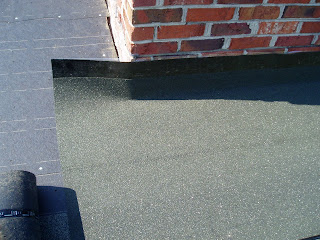

You can see how we installed the "ice and water" on the wall and then folded it so it laid flat on the roof deck on all 4 sides of the chimney.
We then installed new step flashing, which is covered up by the new, black counter (outside) flashing.


Once the counter flashing has been caulked, we then finished the repair by installing shingles along all 4 sides of the chimney.
This flashing process will provide problem and leak free service for many years to come.
But wait a minute. Something doesn't look right here. Can you tell what is wrong in the last couple of photos? Look carefully. Do you see it?
You are right. It is the shingles. They don't match, do they? The shingles on the back slope are regular 3-tab shingles. The front shingles are a CertainTeed Horizon shingle, which unfortunately were discontinued a couple of years ago. In order to make the front slope of the roof (look) presentable, we kept and in some instances "reused" the Horizon shingles from the back roof slope whenever possible. We simply installed the new shingles on the back slope where they would not be as noticeable or visible.
We took a much different approach to solving the flashing leak. We removed all the shingles, felt and metal flashing. Upon cleaning the perimeter very thoroughly,
we installed a weather barrier or generically referred to as "ice and water shield" around the perimeter as you can see below.


You can see how we installed the "ice and water" on the wall and then folded it so it laid flat on the roof deck on all 4 sides of the chimney.
We then installed new step flashing, which is covered up by the new, black counter (outside) flashing.


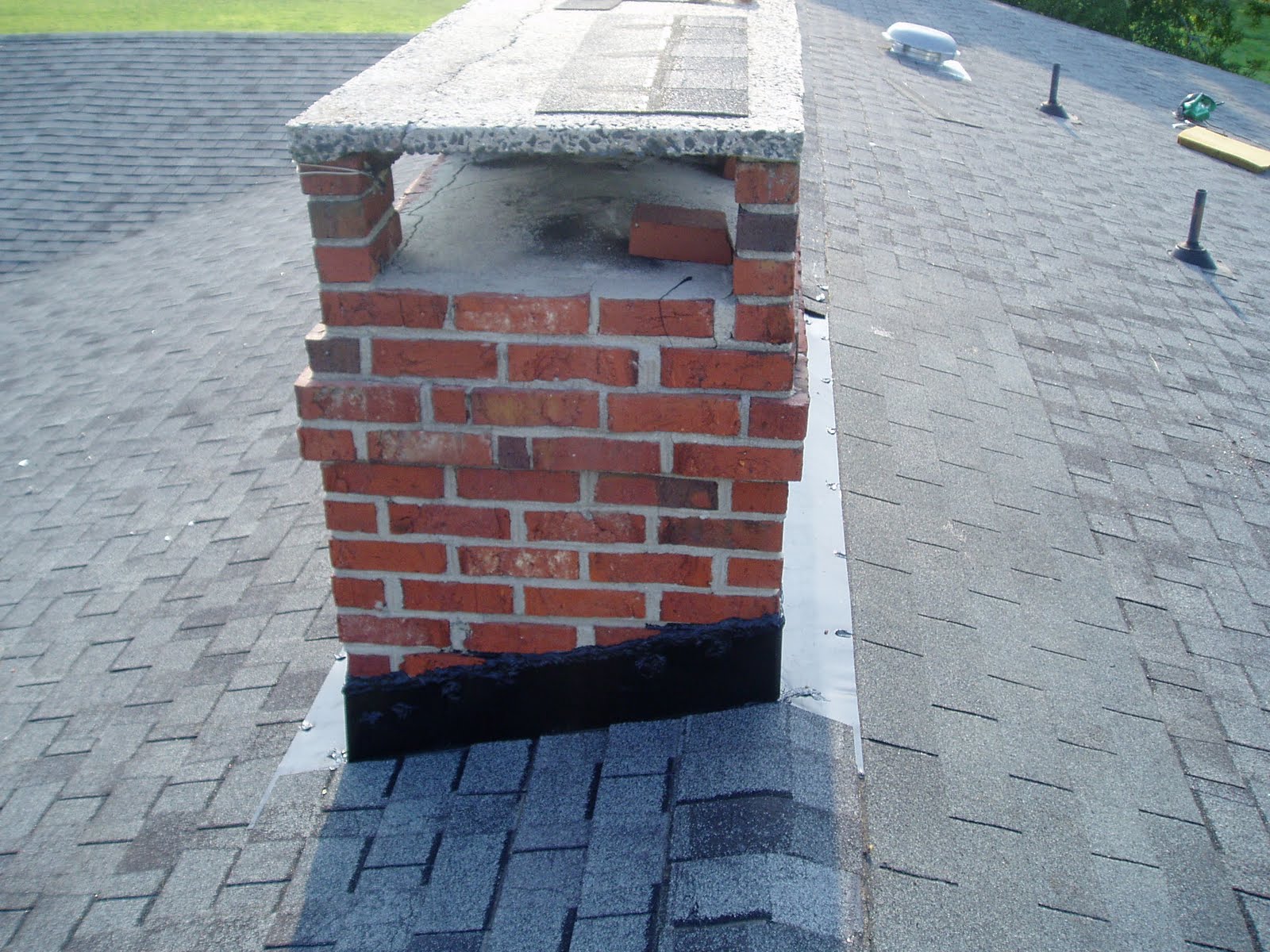
Once the counter flashing has been caulked, we then finished the repair by installing shingles along all 4 sides of the chimney.
This flashing process will provide problem and leak free service for many years to come.
But wait a minute. Something doesn't look right here. Can you tell what is wrong in the last couple of photos? Look carefully. Do you see it?
You are right. It is the shingles. They don't match, do they? The shingles on the back slope are regular 3-tab shingles. The front shingles are a CertainTeed Horizon shingle, which unfortunately were discontinued a couple of years ago. In order to make the front slope of the roof (look) presentable, we kept and in some instances "reused" the Horizon shingles from the back roof slope whenever possible. We simply installed the new shingles on the back slope where they would not be as noticeable or visible.
Thursday, February 10, 2011
Pipe Boots: A Small Item Which can Create LARGE Roof Problems
There are several items on any given roof. One of the smallest items are pipe boots or pipe collars. These are the black rubber and PVC units you see on the bottom of those white (vent)pipes protruding from your roof. Their purpose is to prevent water from penetrating through the hole in the roof deck.
As you can see here, this boot is severely cracked. As a result, every time there is rain, the attic below is getting wet. Left unchecked, penetrating rain water will begin to rot the plywood or OSB (Orient Strand Board)decking creating a more serious leak issue.
Generally the pipe boots will start to deteriorate in 7-10 years after they are installed. Certainly their exposure to the sun will increase the deterioration process. The seal on top becomes brittle and begins to crack.
In a sense, pipe boot failure is much like brake failure on your car. Rarely, do the brakes go bad on both wheels simultaneously. The same is true with pipe boots. Not every boot on your roof will fail at the same time. But with some time, all the other boots will begin to fail as well.
However, just like brakes, your mechanic will recommend replacing both or all brakes simultaneously. It is wise to replace all pipe boots at once. By doing so, you will have the satisfaction knowing your roof will be "water-tight" at those vent pipe (boot) penetrations.
If you have a pair of binoculars, why not have a look at the pipe boots on your roof? If you do not see any indication of cracking you can be sure they are doing their job. If there is evidence you should contact you roof contractor to have the boots removed and replaced.

As you can see here, this boot is severely cracked. As a result, every time there is rain, the attic below is getting wet. Left unchecked, penetrating rain water will begin to rot the plywood or OSB (Orient Strand Board)decking creating a more serious leak issue.
Generally the pipe boots will start to deteriorate in 7-10 years after they are installed. Certainly their exposure to the sun will increase the deterioration process. The seal on top becomes brittle and begins to crack.
In a sense, pipe boot failure is much like brake failure on your car. Rarely, do the brakes go bad on both wheels simultaneously. The same is true with pipe boots. Not every boot on your roof will fail at the same time. But with some time, all the other boots will begin to fail as well.
However, just like brakes, your mechanic will recommend replacing both or all brakes simultaneously. It is wise to replace all pipe boots at once. By doing so, you will have the satisfaction knowing your roof will be "water-tight" at those vent pipe (boot) penetrations.
If you have a pair of binoculars, why not have a look at the pipe boots on your roof? If you do not see any indication of cracking you can be sure they are doing their job. If there is evidence you should contact you roof contractor to have the boots removed and replaced.
Wednesday, September 23, 2009
Roof Leaks in Your Attic
The Good News here in the Triangle is we finally got our rain.
The Bad News is it has probably uncovered some roof leaks in our
homes.
This is an outstanding time to go into your attic and inspect the roof
sheathing for leaks. Take a flashlight with you so you can better see
into those dark nooks otherwise known as rafter bays.
Carefully scan the plywood or OSB sheathing with your flashlight. You
are looking for "dark" stains or even dripping water. The darker and
wetter the stain, the longer that area has been leaking. Check very
carefully around penetrations through the roof, such as, chimney, white
PVC vent pipes or bathroom or kitchen exhaust vents. Those are most
the likely areas to have problems.
Hopefully you do not find anything concerning in your roof. However,
if you do, you should contact a professional to evaluate the situation in
greater detail.
The Bad News is it has probably uncovered some roof leaks in our
homes.
This is an outstanding time to go into your attic and inspect the roof
sheathing for leaks. Take a flashlight with you so you can better see
into those dark nooks otherwise known as rafter bays.
Carefully scan the plywood or OSB sheathing with your flashlight. You
are looking for "dark" stains or even dripping water. The darker and
wetter the stain, the longer that area has been leaking. Check very
carefully around penetrations through the roof, such as, chimney, white
PVC vent pipes or bathroom or kitchen exhaust vents. Those are most
the likely areas to have problems.
Hopefully you do not find anything concerning in your roof. However,
if you do, you should contact a professional to evaluate the situation in
greater detail.
Sunday, August 23, 2009
Welcome to Raleigh Roof Information
My name is Matt Maresh. I have worked in the roofing industry in Raleigh for nearly 12 years. In that time I have developed a solid understanding of both residential and commercial roofing.
It is my goal with RRI to be able to provide valuable insight to you from both my experiences as a contractor as well as a perspective from other experts for the purpose of saving you time and money.
By having access to addition information about your roof, you can be better equipped to deal with potential problems before they become serious. I will also be providing information how to work with roof contractors as a team, in order to get the best value for your repair or replacement.
Certainly, I welcome your comments and questions. Let me know what you think or how I may help.
Please visit: www.raleighroofcontractor.com
It is my goal with RRI to be able to provide valuable insight to you from both my experiences as a contractor as well as a perspective from other experts for the purpose of saving you time and money.
By having access to addition information about your roof, you can be better equipped to deal with potential problems before they become serious. I will also be providing information how to work with roof contractors as a team, in order to get the best value for your repair or replacement.
Certainly, I welcome your comments and questions. Let me know what you think or how I may help.
Please visit: www.raleighroofcontractor.com
Subscribe to:
Posts (Atom)

